
How Does Grid-Tied Solar Power Work?
Understanding how solar panels, your home, the electric grid, and battery storage work together to power your life.
Solar energy is a smart way to lower electricity bills, reduce dependence on the utility grid, and take greater control of your home’s energy costs. But how exactly does a grid-tied solar system work? And what changes when you add battery storage?
How Grid-Tied Solar Works
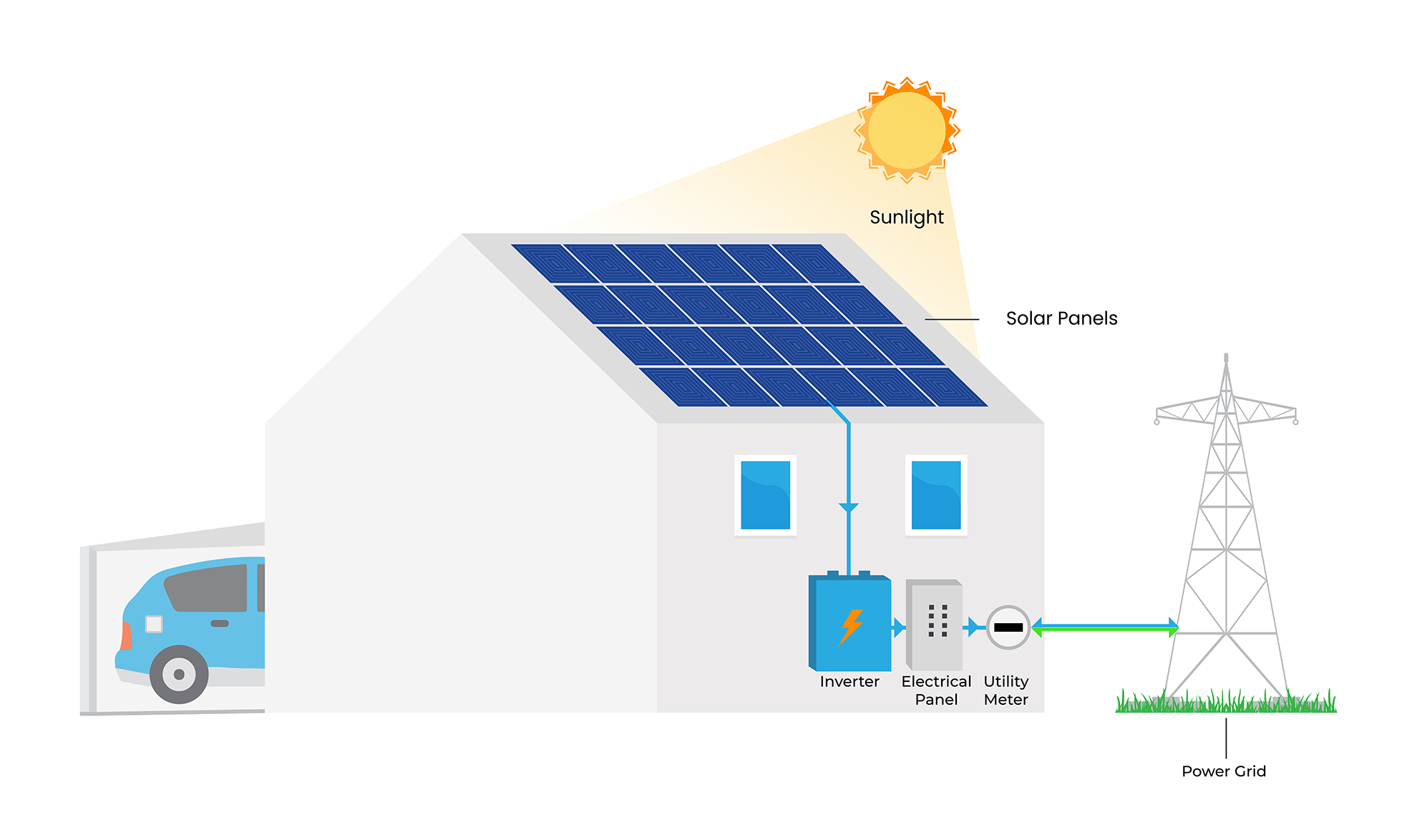
A grid-tied solar system generates electricity from sunlight while keeping your home connected to the local utility grid. This means you can use electricity produced by your solar panels and draw power from the grid whenever you need it.
Here’s how it works:
1. Solar Panels Capture Sunlight
Solar panels installed on your roof absorb sunlight and convert it into direct current (DC) electricity. The more sunlight your panels receive, the more electricity they can produce, depending on system size, weather conditions, and other factors.
2. An Inverter Converts Electricity for Your Home
Most household appliances and electrical systems run on alternating current (AC) electricity. A solar inverter converts the DC electricity generated by your panels into usable AC electricity.
3. Your Home Uses Solar Power First
When your solar panels are producing electricity, that energy powers your home’s electrical needs, including air conditioning, refrigerators, lighting, and appliances. If your panels generate more electricity than your home needs at that moment, the excess energy can flow back to the utility grid, depending on your utility agreement and interconnection program.
4. The Grid Supplies Electricity When Solar Isn’t Enough
Solar panels produce electricity during daylight hours, with production typically peaking around midday. But your home needs power around the clock. When solar production drops, such as during cloudy weather, in the evening, or overnight, your home automatically draws the additional electricity it needs from the grid. This seamless exchange between solar production and utility power happens without you having to do anything.
What Happens During a Power Outage?
Here’s something that surprises many homeowners: a standard grid-tied solar system automatically shuts down during a utility outage, even when the sun is shining. This safety feature prevents your system from sending electricity onto utility lines while crews may be working to restore power. That’s where battery storage comes in.
Adding Battery Storage: More Control, More Independence
Adding a battery transforms a grid-tied solar system into a more flexible energy solution. Instead of sending all your excess solar electricity to the grid, you can store some of it for later use.
Here’s how solar and battery storage work together:
1. Solar Panels Power Your Home
Just like a standard grid-tied system, your solar panels generate electricity to meet your home’s immediate energy needs.
2. Excess Solar Energy Charges Your Battery
When your panels produce more electricity than your home consumes, surplus energy can charge your battery. Once the battery reaches its designated charge level, additional solar electricity may be exported to the grid, depending on your system configuration and utility program.
3. Your Battery Powers Your Home When Solar Production Drops
As the sun sets or household electricity demand increases, your system can automatically draw energy from the battery instead of immediately purchasing electricity from the grid.
This helps you use more of the solar electricity you generate, potentially reducing your utility bills.
4. Your Battery Provides Backup Power During Outages
Unlike a standard grid-tied system, a properly configured solar-plus-storage system can continue powering designated household circuits during a utility outage.
When the grid goes down, the system safely disconnects from utility power and switches to battery backup. Depending on system design and available sunlight, your solar panels may continue producing electricity to power your home and recharge the battery.
Backup duration depends on battery capacity, household electricity consumption, weather conditions, and whether your system supports essential loads or whole-home backup.
Why Add Battery Storage to Solar?
For Hawai‘i homeowners, combining solar with battery storage offers several important advantages:
Greater Energy Independence: Store more of the electricity you generate instead of relying entirely on the grid.
Backup Power: Keep essential appliances and devices operating during utility outages.
More Solar Savings: Use stored solar electricity in the evening and potentially reduce grid purchases.
Better Energy Management: Take advantage of compatible utility programs and incentives that may provide additional financial benefits.
Make the Most of Your Solar Investment
Whether you choose grid-tied solar alone or pair it with battery storage, the right system starts with understanding your home’s energy consumption, electricity costs, and long-term goals.
At Sunspear Energy, our experienced team designs and installs solar and storage solutions tailored to Hawai‘i homes, helping homeowners maximize savings, reliability, and energy independence.
Ready to take control of your energy future? Contact Sunspear Energy to explore the benefits of solar and battery storage for your home.
See how much you could be saving
Solar Panels & Home Battery Storage
CALL 808.400.9050 FOR A QUOTE
Or leave us a message using this form and a Sunspear Energy representative will follow up with you shortly.